

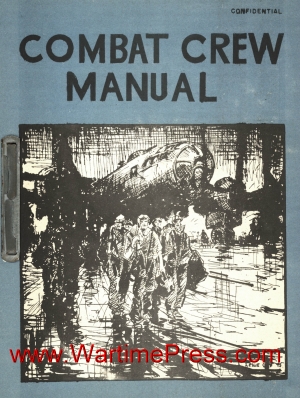
Description
This is a “Combat Crew Manual” produced by XXI Bomber Command, dated May 1945 (A.P.O. 234), marked CONFIDENTIAL. It was prepared under the authority of Major General Curtis E. LeMay for B-29 combat crews operating in the Pacific theater during WWII. The foreword explains it was compiled from multiple sources and three years of combat experience to help both new and veteran crews improve bombing accuracy and combat efficiency — with the stated goal of “more bombs on the target” with minimum losses. It covers everything from mission planning and airplane operation to navigation, bombing procedures, radio, gunnery, intelligence, flying equipment, emergency procedures, and aeromedical care.
Table of Contents
FOREWORD
I. TRAINING
II. PLANNING THE MISSION
A. Who does the planning
B. The sequence of the planning
C. Factors involved in the planning
D. Conclusion
III. THE AIRPLANE COMMANDER
A. The airplane commander and the combat crew
B. Operating procedures
C. Formation flying
D. The combat mission
E. Maintenance
F. Emergency operations
G. Conclusion
IV. THE FLIGHT ENGINEER
V. RADAR
Introduction
A. Set operation and maintenance
B. Scope interpretation
C. Radar navigation
D. Radar bombing
E. Radar operator’s standard bombing procedure
VI. COMBAT NAVIGATION
A. Introduction to combat navigation
B. Navigation instruments
C. Dead reckoning
D. Radio facilities and aids to navigation
E. Celestial tactical procedure
F. Radar navigation and bombing
G. Loran
H. Drift determination by radio altimeter
VII. COMBAT BOMBING
Part I – Bombing
A. Introduction
B. Combat bombing
C. Flying the wing position
D. Bombardiers as navigators
E. Bombardiers complete check list
F. Reference point bombing
G. DR bombing
Part II – Bombardier’s Information File
A. Altitude computations
B. Determination of ground speed and drift using the bombsight
C. Determination of dropping angle
D. AB computer
E. Ballistic wind and disc speed change
F. Miscellaneous bombing formulae
G. Bombing errors in synchronous bombing
H. Detection of common malfunctions – trouble shooting
I. C-1 autopilot
J. The A-2 mechanical release system
K. A-4 all electric release system
L. The A-4 release mechanism
M. Preflight check of racks, controls, releases, doors, intervalometer and bombs
N. Pneumatic bomb bay doors
O. Shackles
P. Agastat time delay relay
Q. Photographic equipment – B-29
VIII. RADIO PROCEDURE
A. Introduction
B. Airborne radio equipment
C. Ground radio facilities
D. Operating procedures
E. Air-sea rescue communications
F. Visual signaling equipment
G. Briefing material carried in aircraft
H. Communications publications and forms
I. Miscellaneous
J. Special procedures
K. Conclusion
IX. COMBAT GUNNERY
A. Care of equipment in Pacific operations
B. Headspacing and timing
C. Preflight inspections
D. Operating procedures
E. Length of bursts
F. Enemy tactics
X. INTELLIGENCE
A. Introduction
B. Japanese air forces
C. Japanese fighter aircraft
D. Japanese fighter tactics
E. Japanese anti-aircraft artillery
F. Reconnaissance, recognition and reporting
G. Radar intelligence
H. Naval and merchant ship recognition
I. Security
J. Terrain and target identification
XI. FLYING EQUIPMENT
A. Oxygen system and equipment
B. Cold weather clothing
C. Life preserver vest
D. Flak suits and helmets
E. First aid kits
F. Parachutes
G. Ditching equipment
XII. EMERGENCY PROCEDURES
A. Bailout
B. Crash landings
C. Ditching
D. Fire
E. Air-sea rescue
XIII. MEDICAL ASPECTS OF COMBAT
A. First aid in flight
B. Aero-medical information for combat crews